Skip to: Navigation | Content | Sidebar | Footer

Inflight Magazine of Brussels Airlines

Welcome to the Inflight Magazine of Brussels Airlines
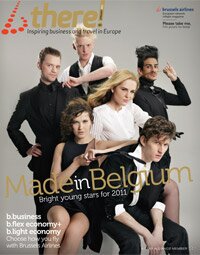
CoverIssue
Destination Guides
Archives

High-class kicks

Burlesque is back with a vengeance, changing the face of Europe’s night life, as Monisha Rajesh discovers

What am I wearing right now? Well, just underwear.”
Whether or not Catherine D’Lish really is wearing no clothes is left to the imagination. But it’s clear as she giggles down the phone that preserving the image of her character is important both on and off the stage – an idea mirrored by her best friend and colleague, Dita von Teese, probably the world’s most famous burlesque star.

D’Lish, who makes von Teese’s costumes, designs her shows and performs with her, looked impeccable, stretched out inside an enormous champagne glass at the Erotica Show in London last year, her bright red-painted toes extended for added finesse. She adores the London scene, saying, “Burlesque is seriously hot over there; the performers are just multiplying like rabbits. People see their friends performing and they think, ‘Hey, I can do that too’. The London burlesque artists take a real pride in their work – it’s definitely a very big, growing community.”

In fact burlesque is heaving out of the underground faster than commuters on a Friday night, but where has it been since its Berlin-based heyday, and why is it returning now?

Pinning down the start of burlesque’s first golden era is difficult, as the concept itself has always invited changing definitions. A burlesque show has come to mean anything from a bawdy satire to a straight-up striptease, but supporters of the scene point to the 1920s, at a time when, in Berlin, post-war privations were forgotten in smoky nightclubs, and in London, Covent Garden and Chalk Farm were slowly being built up out of the sex trade. Madames bought their way into society to become property developers – a taboo history transformed into mainstream entertainment.

Its decline can be attributed to a lack of exposure and, believe it or not, the rise of pornography. In the 30s and 40s, the creation of iconoclasts like Marilyn Monroe and James Dean was still a decade away. Without television or a fame-hungry media – things that starlets of any stripe take for granted these days – many acts simply lacked the popularity to sustain their careers. Worse, as burlesque and vaudeville started to compete for audiences, they found that pornography had diverted the attention of traditional supporters, who were now able to get their erotica cheaper – and harder – elsewhere.

But all that has changed. David Wilson is the producer and co-founder of The Flash Monkey – veterans of the new burlesque cabaret scene that reemerged at the turn of the 21st century. They have filled every show at the Café de Paris in Piccadilly Circus to capacity (that’s around 600 people) simply by word of mouth.

The Flash Monkey (theflashmonkey. biz), a loose collective of constantly changing characters including circus performers and sideshow acts, are a collision of the old and new faces of burlesque. For instance they use exclusively live music on stage, rather than the pre-recorded backing tracks that accompany the nipple tassle stripshows of America – the media’s most common, albeit restrictive, portrayal of burlesque. The Flash Monkey actually started life as a band, but decided to merge their music with visual projections. After a night out at the Vauxhall Barge with their old pal Kelly, better-known these days as the world famous Miss Immodesty Blaize, they put together the Whoopee Club, and lit the fuse that would lead to an explosion of new burlesque in Europe.

Why now? According to Wilson it’s because, “People have been starved of live music and entertainment for almost 15 years. DJs and pre-recorded music have dominated because they’re economically very viable – one guy and some machinery doesn’t cost a lot.”

The Flash Monkey’s unique commitment to accompanying every act with live music is much more in keeping with the spirit of burlesque from the 20s to the early 60s. What is also apparent is that new burlesque has no rules and no restrictions.

Nor, it seems, does the burlesque of D’Lish. She says proudly, “I am just a stripper, but what I do is burlesque. A lot of these neo-burlesque people seem to have a very puritanical approach to it, as though stripping is horrible. They claim they would never do anything so tawdry as to expose themselves. For some, it’s an art form about parody and satire, but for me, the focus is absolutely on the stripping rather than the teasing. Above all, it’s about having fun.”

Outside London and America, burlesque fever is spreading across Europe, although it is still relatively slow. Despite the Folies Bergeres and the badass chicks from the Moulin Rouge, Paris has almost no regular burlesque clubs. Instead, it’s Berlin that takes centre stage. White Trash Fast Food in the Bohemian stronghold of Prenzlauer Berg is a venue which puts on regular burlesque and freak shows, and is always looking to host new talent.

In Belgium, Brussels-born Didi von Horne – who performed at one of the world’s biggest burlesque conventions, the Teaseorama in San Francisco, last year – is pioneering a new scene. It was also in Belgium that Marisa Carnesky, a performer with beautiful body tattoos, had particular success with an act called the ‘Ghost Train: a dark ride across haunted borders’ on an actual moving carriage.

However, it seems that no matter where you go, burlesque is burlesque. For D’Lish, every show has a timeless appeal; it’s simply a case of achieving an iconic style, and it doesn’t matter where she is. D’Lish says: “I don’t tailor my show to suit any town or country, it’s always the same music, same show, and audiences react exactly the same way!”

And if you take a trip into its weird and wonderful world, you’ll see that the beauty of burlesque lies in the way it embraces men, women, underdogs, freaks, the classically beautiful and the classically talented. But above all, it’s a celebration of music, life and laughter.


Where to go

London
Café de Paris
3-4 Coventry Street, London W1V 7FL, tel. +44 (0)871 332 3306
Volupté
9 Norwich Street, EC4A 1EJ, tel. +44 (0)20 7831 1622

Berlin
White Trash Fast Food Restaurant and Diamond Lounge Schönhauser Allee 6/7, 10119 Berlin, tel. +49 (0)30 5034 8668. Sundays after 8pm call +49 (0)30 4403 9403.
The Sage Club
Köpenicker Straße 76, U-Bhf. Heinrich-Heine-Straße 10179 Berlin-Mitte, tel. +49 (0)30 27 89 83 – 0

Barcelona
Tablao Cordobes -Barcelona’s traditional home of flamenco now also hosts burlesque nights
La Rambla 35, Barcelona 08002, tel. +34 93 317 5711

Le burlesque frappe un grand coup

Le Burlesque prend sa revanche et opère son grand retour, changeant la face du monde du spectacle en Europe.

Retracer le premier âge d’or du burlesque s’avère un exercice difficile, vu que le concept même s’est toujours prêté à des définitions variables. Un spectacle burlesque peut aussi bien vouloir dire satire absurde que striptease purement et simplement, mais les défenseurs du genre retournent aux sources, à Berlin dans les années 1920, à l’époque où les privations de l’après-guerre s’oubliaient dans des clubs de nuit enfumés. A Londres aussi, lorsque Covent Garden et Chalk Farm se développaient progressivement à partir du commerce sexuel.

D’après David Wilson, producteur et cofondateur du The Flash Monkey – un vétéran du nouveau spectacle de cabaret burlesque qui a refait surface au tournant du 21st siècle, ‘la nouvelle émergence du burlesque aujourd’hui est liée au fait que les gens ont été profondément privés de spectacles musicaux et de distractions pendant près de 15 ans. Nous avons été dominés par les DJs et la musique enregistrée parce que c’est économiquement plus avantageux, un homme et un peu de technique ne coûtent pas très cher.’

En dehors de Londres et des Etats-Unis, la fièvre du burlesque est en train de se propager dans toute l’Europe. Malgré les Folies Bergères et les filles de moeurs légères du Moulin Rouge, Paris n’a presque pas de clubs burlesques réguliers.

C’est plutôt à Berlin que le centre s’est déplacé, et l’on trouve aussi une offre particulière à Rome et à Barcelone.

En Belgique, Didi von Horne, natif de Bruxelles est le pionnier de cette nouvelle scène.

Mais où que vous alliez, le burlesque sera toujours le burlesque: la célébration de la musique, de la vie et du rire.

Hup met de beentjes

Burleske is helemaal terug en betekent een ommekeer voor het Europese nachtleven.

Moeilijk te zeggen wanneer burleske (of vaudeville) voor het eerst gouden jaren beleefde, want het genre evolueerde door de tijd, met telkens andere invullingen. Tegenwoordig houdt burleske het midden tussen schuine satire en onvervalste striptease. Maar aanhangers verwijzen liever naar de jaren ’20, toen in Berlijn de naoorlogse ontberingen vergeten werden in rokerige nachtclubs, en men in Londen voor pikant vertier naar Covent Garden en Chalk Farm trok.

David Wilson is producer en medeoprichter van The Flash Monkey, een bekend gezelschap op de nieuwe burleske cabaretscène die rond de recente eeuwwisseling uit haar as verrees. Volgens hem herleeft het genre omdat “de mensen het al bijna 15 jaar zonder live muziek en vertier moeten stellen. Dj’s en muziekopnames vierden hoogtij omdat die nu eenmaal het meest rendabel zijn: één persoon en wat apparatuur, duur is dat niet.”

Na Londen en Amerika neemt burleske Europa verder in. Maar buiten de Folies Bergères en de stoute dames van de Moulin Rouge heeft Parijs voor het overige bijna geen clubs met burleske shows. Berlijn neemt nu het voortouw, terwijl ook Rome en Barcelona voor burleske gaan. En in België zorgt de Brusselse Didi von Horne voor baanbrekend variété.

Maar waar je ook gaat, burleske blijft burleske: een eerbetoon aan muziek, het leven en plezier.


Leave a Reply