bthere inflight magazine of brussels airlines
Welcome to the Inflight Magazine of Brussels Airlines
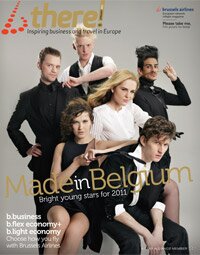
The Categories

Driven man

Being the boss of a Formula One motor racing team takes much more than keeping cars running around a track. It means having a €270m budget to fuel and the world’s biggest sponsors to lure. As Christian Sylt discovers, it’s a skill that Renault’s Flavio Briatore has mastered better than anyone

Flavio Briatore has a playboy lifestyle to die for. He part-owns one of London’s finest restaurants, a nightclub in Sardinia and a spa resort in Kenya – and his day job is running the Renault F1 team. Briatore is currently on a career high, after winning back-to-back world championships with his Spanish star driver Fernando Alonso.

Indeed, Briatore is the only man to have ever won F1 constructors titles with different teams, having been behind the Benetton squad which gave racing legend Michael Schumacher his first victories. To achieve success on this scale requires nothing less than sheer determination, and Briatore is nothing if not a driven man.

Though he’s amassed an estimated fortune of over €150m, Briatore’s upbringing was very much a middle-class one. He was raised in Montaldo di Mondovi, a small town south of Turin. He admits to a fairly strict upbringing by his parents who were both teachers.

But Briatore had big aspirations. He took a multitude of jobs – from ski instructor to selling insurance – but his big break came when he met clothing magnate Luciano Benetton while working at the Milan stock exchange in 1974. Benetton soon took him on board, recognising that his persuasive personality would be ideal for rolling out the fashion brand in the US.

In 1988, Benetton invited Briatore to the Australian Grand Prix. The company owned an F1 team, and after Briatore’s success in the US, Benetton put him in charge of it.

Briatore soon found his forte as a talent spotter by hiring Michael

Schumacher, who brought the team a constructors and two drivers championships. It also made Briatore’s name in sports.

After taking the clothing company to the pinnacle of F1, Briatore took a few years sabbatical. But he was brought back when Benetton sold its team to Renault in 2000. The team began at the back of the grid, but Briatore soon put it on track.

With Alonso behind the wheel, Renault broke Ferrari’s five-year F1 winning streak in 2005, and crowned the sport’s youngest ever champion. Briatore repeated the feat in 2006, with Renault taking both the F1 constructors and drivers titles in a nail-biting climax.

Briatore proved that winning comes naturally to him. He treats running an F1 team no differently to running any other company and never loses focus. “Formula One is a simple business,” he says. “You have the product – the car – and what matters is how it performs on the track. If you lose sight of that, you are finished. So you need to get the most performance from your product – the most points – for the smallest investment.”

To maximise return on investment, Briatore decided that building a winning car, rather than building a brand, was the key to success in F1. Renault’s team revolves around improving the strength of the car. Everything else is peripheral. “You invest the money you have in the car, in what makes the car quicker,” he explains.

Maintaining the balance of performance and cost requires clear-headed, efficient management and the ability to make fast decisions. Although F1’s glitz and glamour can be alluring to many companies looking to add spice to their image, Briatore urges investors not to be distracted by this.

“Too many people are emotional about Formula One, but you have to be able to make business decisions with a clear head,” he says. “Like all businesses, I have to show a profit.” And he delivers. Renault F1’s latest accounts show a €5.3m profit, up 31 % on the previous year. But the team isn’t resting on its laurels. During 2005, operating expenses increased 28 % and staff numbers grew by 10 %. The secret is reinvestment. Briatore says: “In financial terms, you need efficiency and to be clear-sighted but flexible as well.”

Until late 2006, Renault was one of the few F1 teams to retain its tobacco sponsorship, Japan’s Mild Seven brand paying an estimated €50m for the privilege. However, as a ban on cigarette advertising in the sport came into effect at the end of the year, Briatore was forced to look elsewhere. In October he secured ING, the Amsterdam-based bank, as a replacement.

His challenges for 2007 are equally great. During 2006 Alonso announced that he was going to leave Renault for the fresh challenge of winning with the rival McLaren outfit. It didn’t faze Briatore, who says: “There is a great motivation in beginning a new era without Fernando and in proving that the strength of Renault is about more than one person. The driver translates all this work at the end, but you need the right group of people working in the right structure.”

Off-track, Briatore had much to be cheerful about in 2006. He had a kidney tumour successfully removed in August, and although he admits, “My work is 90 % F1,” he also expanded his other interests.

In 1998 he founded the upmarket Billionaire nightclub in Sardinia, and has since extended the brand to Billionaire Italian Couture. In Kenya he is building a luxury spa resort and opening a casino. And he is as at home in the company of supermodels as he is with mechanics.

His recipe for success is: “To have a clear vision and objectives; to invest wisely and to respect your competitors.” Doing so has put Briatore in pole position and it’s where he seems set to stay.

Homme de course

Flavio Briatore est le seul patron de Formule 1 à avoir remporté le championnat des constructeurs avec différentes écuries. A l’heure actuelle sa carrière connaît une ascension fulgurante après sa victoire aux championnats du monde, arrachée après une lutte intensive par son pilote ’star’, l’espagnol Fernando Alonso.

Il démarre avec Benetton en 1974, en implantant la marque aux US. En 1988, il rejoint l’équipe de F1 de la compagnie. C’est là qu’il découvre rapidement sa force comme découvreur de talents : il engage Michael Schumacher, qui remporte pour l’équipe un trophée des constructeurs et deux titres de champion du monde.

Après quelques années de répit, Briatore fait son retour dans la F1 lorsque Benetton vend son équipe à Renault en 2000. Avec Alonso aux commandes, Renault détrône Ferrari de sa position de champion en titre détenu depuis cinq ans, pour remporter à la fois le palmarès des constructeurs et des conducteurs en 2005 et en 2006.

Briatore gère une équipe de F1 tout comme il gère n’importe quel autre business. Lancer une voiture qui gagne, plutôt qu’une marque, a constitué la clé de son succès. L’équipe Renault cherche constamment à améliorer la voiture. Tout le reste est périphérique. “Beaucoup trop de personnes ont une approche émotionnelle de la F1, vous devez cependant être capable de prendre des décisions professionnelles, en gardant la tête froide,” confie-t-il.

Formule voor succes

Flavio Briatore is de enige Formule 1-baas die constructeurstitels met verschillende teams won. Momenteel schittert hij met zijn Spaanse stercoureur Fernando Alonso, die twee opeenvolgende WK’s won.

In 1974 startte Briatore bij Benetton, en introduceerde het modemerk in de VS. In 1988 maakte hij de overstap naar het Benetton F1-team. Met zijn oog voor talent haalde hij er Michael Schumacher binnen, die voor één constructeurs- en twee coureurstitels zorgde.

Briatori verdween enkele jaren uit de F1, maar dook weer op toen Benetton in 2000 zijn team aan Renault verkocht. Met Alonso achter het stuur verbrak Renault vijf jaar Ferrari-overheersing door in 2005 en 2006 zowel de constructeursals coureurstitel te veroveren.

Briatore ziet geen verschil tussen het leiden van een F1-team en een ander bedrijf. Volgens hem is een winnende wagen, eerder dan een merk, de sleutel tot succes. Het Renault-team bouwt voortdurend aan een betere bolide, de rest is bijzaak. “Veel mensen benaderen F1 te emotioneel, maar je moet zakelijke beslissingen met gezond verstand nemen”, zegt hij.

Ook naast het circuit is Briatore erg actief. In Sardinië opende hij de nachtclub Billionaire, en gebruikt die merknaam ook voor de eerste hautecouturelijn voor mannen, Billionaire Italian Couture. Dan zijn er nog het restaurant Cipriani in Londen en een spa in Kenia. Dat Briatore de formule voor succes kent, blijkt uit zijn fortuin, geraamd op ruim € 150 miljoen.

Print This Post Print This Post   Email This Post Email This Post

No Comments »

No comments yet.

RSS feed for comments on this post. TrackBack URI

Leave a comment


© Ink Publishing 2008. All Rights Reserved.